
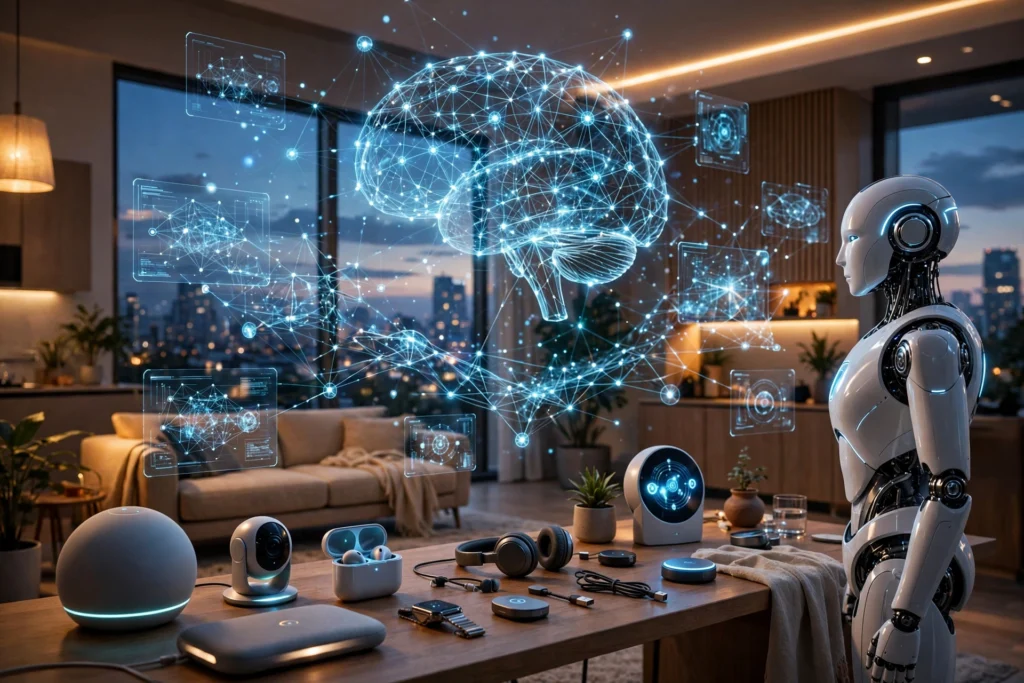
Artificial intelligence is no longer a futuristic concept confined to research labs. In 2026, AI has quietly woven itself into the fabric of our daily routines, often in ways we do not even notice. From the moment we wake up to the time we go to bed, intelligent systems work behind the scenes to make life easier, safer, and more productive.
AI in Our Homes
Smart homes have evolved far beyond voice-activated lights. Today’s AI-powered home assistants learn your habits and anticipate your needs. Thermostats adjust themselves based on your schedule and the weather forecast. Refrigerators track groceries and suggest recipes based on what is inside. Security cameras now distinguish between a family member, a delivery driver, and a stranger, sending you only the alerts that matter.
AI at Work
The modern workplace runs on intelligent automation. AI tools draft emails, summarize long meetings, and organize calendars. Developers use AI coding assistants that catch bugs before they happen. Customer support teams rely on chatbots that resolve most queries instantly, freeing human agents for complex problems. Professionals using AI tools save several hours every single week.
AI in Healthcare and Education
Perhaps the most meaningful impact of AI is in healthcare and education. AI systems help doctors detect diseases earlier by analyzing medical scans with remarkable accuracy. Personalized learning platforms adapt to each student’s pace, making quality education accessible to millions. Mental health apps now offer round-the-clock support through empathetic conversational AI.
What Comes Next
Looking ahead, AI will become even more invisible and intuitive. Expect smarter personal assistants that understand context, AI agents that handle multi-step tasks on your behalf, and deeper integration between the digital and physical worlds. The key challenge will be balancing convenience with privacy, a conversation the tech industry must continue to take seriously.
Final Thoughts
Artificial intelligence in 2026 is not about robots replacing humans. It is about technology amplifying what humans can do. Those who embrace these tools thoughtfully will find more time for creativity, connection, and the things that truly matter.