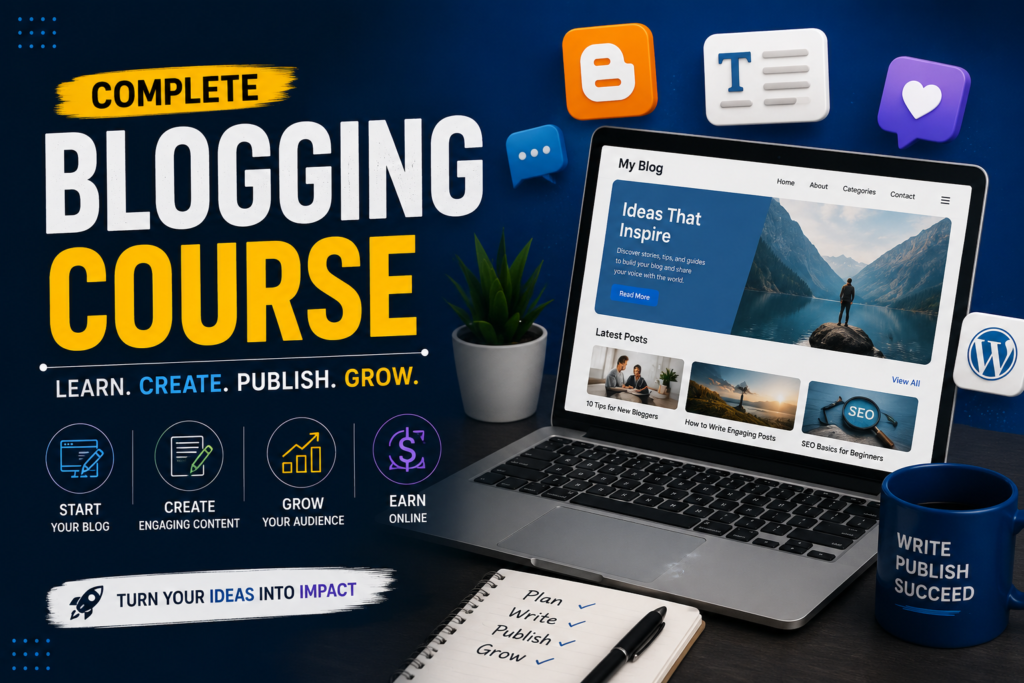
Blogging Course: Learn How to Start, Grow, and Monetize a Successful Blog
Blogging is no longer just a hobby or a way to share personal experiences. Today, blogging can become a powerful online career, business, and income source when it is combined with SEO, content marketing, social media, and the right monetization strategies.
If you want to learn how to create a professional blog, attract visitors from search engines, and turn your content into income, a Blogging Course can give you the practical skills you need to get started.
What Is Blogging?
Blogging is the process of creating and publishing useful content on a website. Blog posts can cover almost any topic, including technology, education, business, health, finance, travel, lifestyle, software, and online earning.
A successful blog focuses on a specific audience and consistently publishes valuable content that solves problems or answers questions.
Why Learn Blogging?
Blogging is a valuable digital skill because it can open several opportunities for students, freelancers, entrepreneurs, and business owners.
With professional blogging skills, you can:
- Start your own blog or niche website
- Learn SEO and increase website traffic
- Earn through advertising
- Promote affiliate products and services
- Build a personal brand
- Generate leads for your business
- Offer content-writing services
- Work as a freelance blogger
- Create a long-term online income source
What Will You Learn in a Blogging Course?
A comprehensive blogging course should take you from the basics to advanced blogging strategies.
1. Introduction to Blogging
Learn the fundamentals of blogging, different types of blogs, blogging platforms, and how professional websites are structured.
2. Choosing a Profitable Niche
Choosing the right niche is one of the most important decisions when starting a blog. You will learn how to research niches based on audience demand, competition, content opportunities, and monetization potential.
3. Domain and Hosting
Learn how to select a suitable domain name, purchase hosting, connect your domain, and set up your website.
4. WordPress Website Setup
WordPress is widely used for creating blogs and content websites. You can learn how to install WordPress, select a theme, configure essential settings, and create important website pages.
5. Keyword Research
Keyword research helps you understand what people are searching for online. You will learn how to find relevant keywords and use them naturally in your content.
6. SEO for Bloggers
Search Engine Optimization can help your blog appear higher in search results. Topics may include:
- On-page SEO
- Keyword optimization
- Title optimization
- Meta descriptions
- Internal linking
- Image SEO
- URL optimization
- Content structure
- Search intent
7. Writing SEO-Friendly Blog Posts
Learn how to create engaging, informative, and search-friendly articles with effective headings, introductions, paragraphs, images, FAQs, and calls to action.
8. Content Planning
Successful bloggers need a consistent content strategy. You will learn how to create content calendars, identify content ideas, and develop topic clusters.
9. Link Building and Off-Page SEO
Learn the fundamentals of backlinks, digital PR, guest posting, outreach, and other ethical strategies for improving website authority.
10. Blog Monetization
A blog can generate income through multiple methods, including:
- Google AdSense and other advertising networks
- Affiliate marketing
- Sponsored content
- Digital products
- Online courses
- Services
- Lead generation
- Brand partnerships
Who Should Take a Blogging Course?
This course can be useful for:
- Students
- Beginners
- Freelancers
- Content writers
- Digital marketers
- Website owners
- Entrepreneurs
- Small business owners
- YouTubers and content creators
- Anyone interested in earning online
No advanced technical knowledge is required to start learning blogging. Beginners can gradually develop their skills through practical projects.
Blogging vs. Traditional Content Writing
Traditional content writing often focuses on producing written material for clients or companies. Blogging combines writing with website management, SEO, audience research, content strategy, marketing, and monetization.
This makes blogging a broader digital skill that can be used to build your own online property instead of working only for clients.
How Long Does It Take to Learn Blogging?
The basics of blogging can be learned relatively quickly, but becoming successful requires continuous practice.
A good learning path is:
Learn → Build → Publish → Optimize → Promote → Analyze → Improve
The more consistently you publish useful content and study your website analytics and SEO performance, the better you can understand what works for your audience.
Start Your Blogging Journey
Blogging can be a powerful skill for anyone who wants to build an online presence or explore digital income opportunities. Instead of simply learning theory, focus on creating a real website, publishing useful content, practicing SEO, and measuring your results.
A practical Blogging Course can help you build these skills step by step and give you the foundation needed to start your own blog or pursue blogging as a freelance career.
Start learning blogging today and turn your knowledge, ideas, and expertise into valuable online content.